What to Expect at Your First Personal Training Session
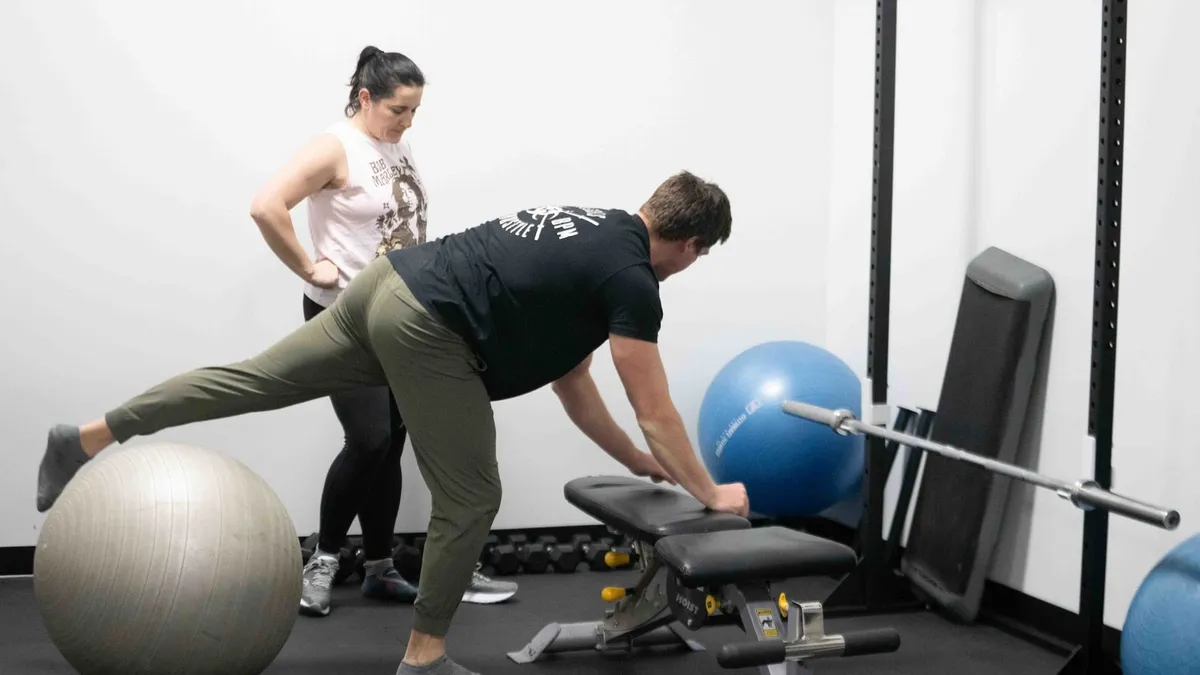
Your first personal training session is mostly a conversation. You talk through your health history, your goals and anything that hurts. Your trainer watches you move through a few basic patterns. Then you do a short, manageable workout built around what they just saw. Nobody tests you to failure, and nobody expects you to be fit already.
If you have been sitting on the “I should really do something” feeling for months, here is the part usually skipped: not why to train, but what day one feels like.
Key Takeaways
- The first session is an assessment, not a test. Mostly talking and moving through simple patterns so the trainer can build a plan that fits you.
- Feeling nervous is common. In a 2025 UK survey, 47% of adults felt uncomfortable at the thought of joining a gym, and 32% expected to be negatively judged.
- Expect health-history questions. Pre-participation screening is a recognised international standard, so questions about injuries and medications are a good sign, not an intrusion.
- Coaching changes follow-through. In a 2025 randomised trial, 88.2% of the supervised group stuck with the program, against 52.2% given a self-guided plan.
Why does the first session feel so intimidating?
Because you are walking into an unfamiliar room where other people already know the rules, and being watched while you are bad at something is uncomfortable for almost everyone. This is common enough to be measured. It is a normal social response, not a personal weakness, and it says nothing about whether you belong there.
Research published in Frontiers in Sports and Active Living in 2026 cites a 2025 UK survey in which 47% of respondents agreed that “I feel uncomfortable at the thought of joining a gym or leisure facility,” and 32% agreed “I feel I would be negatively judged if I join.” The same paper notes middle-aged and older adults commonly feel intimidated around exercisers who are young, slim and fit, and treats that anxiety as a reasonable reaction rather than something wrong with the individual.
Your starting point is ordinary too: Statistics Canada found only about one in two Canadian adults meet the recommended 150 minutes of activity per week.
What actually happens in a first personal training session?
At a semi-private studio, a first session typically breaks into four parts: a conversation about your history and goals, a look at how you move, a short guided workout, and a plan for what comes next. The exact order and timing vary between studios and trainers. The pattern rarely does.
The conversation comes first. Before anything physical, you sit down and talk. Why now? What has worked before? What has not? What does your week look like? A trainer who skips this is guessing.
Then they watch you move. Usually a few basic patterns: a squat, a hinge, a push, a pull, maybe stepping. The trainer is not scoring you. They are noticing that one shoulder sits higher or that your left knee drifts inward. That is the raw material for your program.
Then you train, lightly. Most first sessions involve real work, at a level you can finish. Loads start conservative because the trainer has no data on you yet. If you walk normally to your car afterwards, the session went correctly.
Then you talk about the plan. What you will focus on, how often, and what the next few weeks look like.
One honest caveat: that sequence is typical of semi-private studios, not a documented MOV-U protocol. For the specifics here, ask via our New Client Information page.
What will the trainer ask you?
Expect questions in three buckets: health history, goals and logistics. Health history covers injuries, surgeries, medications, chronic conditions, pregnancy and anything a doctor has flagged. Goals cover what you want and why. Logistics covers how many days a week you can realistically show up.
The health questions surprise people. They should not. Pre-participation screening is standardised internationally through the PAR-Q+, the Physical Activity Readiness Questionnaire for Everyone, which identifies who should see a physician first. A trainer asking is following normal practice.
Two things people hold back that they should not:
- Mention the thing that hurts. The bad knee, the disc issue, the clicking shoulder. It does not disqualify you. It changes exercise selection, which is the point of hiring a coach.
- Give a real answer about your schedule. If you can commit to two days a week, say two. A program built on an honest number works. An aspirational one falls apart in week three.
What should you wear and bring?
Anything you can move, bend and sweat in. There is no dress code and no correct outfit. Clean indoor shoes, comfortable clothing, water and a way to take notes covers everything you need. Nobody at a semi-private studio is evaluating your gear.
Wear:
- Comfortable clothing you can squat and reach overhead in
- Clean indoor shoes with a flat, stable sole
- Layers, since you will warm up quickly
- Hair tied back if that is easier
Bring:
- A water bottle and a small towel
- Your phone or a notebook, if you want to record what you did
- A list of injuries, medications and past conditions, so you are not recalling them on the spot
Leave at home: the pressure to look like you already train. The trainer’s job is easier when you show up as you actually are.
What if you’re the least fit person in the room?
Then you are the person the studio is built for, and the trainer will be glad you came. Beginners are the most common starting point in personal training, not the exception. In a semi-private setting, everyone works through their own program at their own level, so there is no shared standard for you to fall short of.
The person beside you is not doing your workout. They are on their own plan, at their own load. There is no group pace to keep up with, which is why the format suits nervous beginners. We break the model down in what semi-private personal training actually means.
The other quiet fear is being judged by the trainer. They are watching your bodyweight squat and thinking about ankle mobility, not about you. Struggle is data.
Will you be sore the next day?
Possibly, and it is normal if you are. Delayed onset muscle soreness typically starts one to three days after a workout and rarely lasts more than five days, according to the Cleveland Clinic. It usually follows a new activity or a harder session than you are used to, which describes almost everyone’s first session.
The distinction that matters: soreness versus pain. Cleveland Clinic notes soreness is usually a sign your body is repairing and rebuilding muscle fibres. It is dull, spread across a muscle group, worse when you first get up. Sharp, localised or persistent pain is different, and worth flagging to your trainer and a physician.
A well-run first session leaves you moderately sore at most. The goal on day one is to gather information and get you back through the door on day two.
What happens after your first session?
You should leave with two things: a clear picture of where you are starting, and a plan for the next few weeks. That usually covers how often you will train, what you are focusing on first, and what to do on the days between sessions. If any of it is unclear, ask before you leave.
Most beginner programs settle into two or three sessions a week, which lines up with the Canadian 24-Hour Movement Guidelines: muscle-strengthening activities using major muscle groups at least twice a week, alongside 150 minutes of moderate-to-vigorous aerobic activity.
Progress then comes from gradually doing a bit more. The American College of Sports Medicine’s 2026 position stand concluded healthy adults should perform progressive resistance training, varied to the individual’s goal. Your first session is the baseline it progresses from.
Does having a coach in the room actually change anything?
Yes, measurably, in two ways: you train harder than you would alone, and you show up more often. The second one matters more for most beginners, because the main reason people fail at fitness is not bad programming. It is stopping.
On effort, a study in Medicine & Science in Sports & Exercise compared supervised with unsupervised resistance training over 12 weeks. The supervised group increased their loads faster and finished with greater maximal strength gains.
On follow-through, a 2025 randomised controlled trial in the Journal of Strength and Conditioning Research split 79 trained adults across three approaches over 10 weeks. Of those handed a self-guided PDF, only 52.2% completed enough of the program to count as sticking with it. With in-person supervision, 88.2% did.
That gap is the honest argument for coaching, and we cover the trade-offs in whether a personal trainer is worth it.
Booking your first session at MOV-U
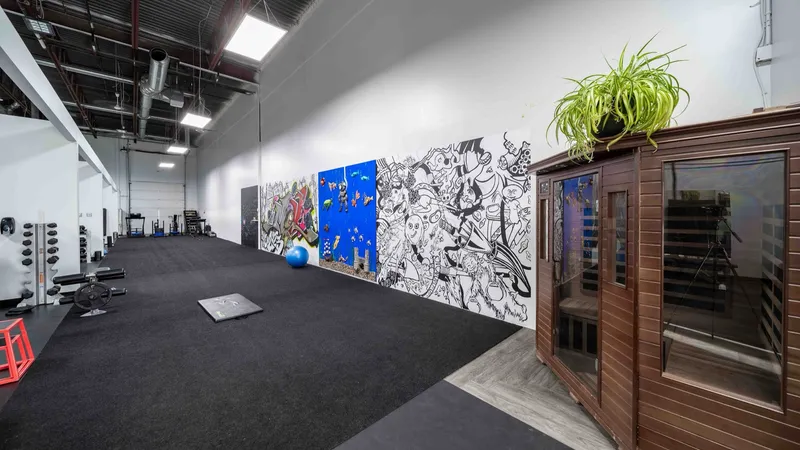
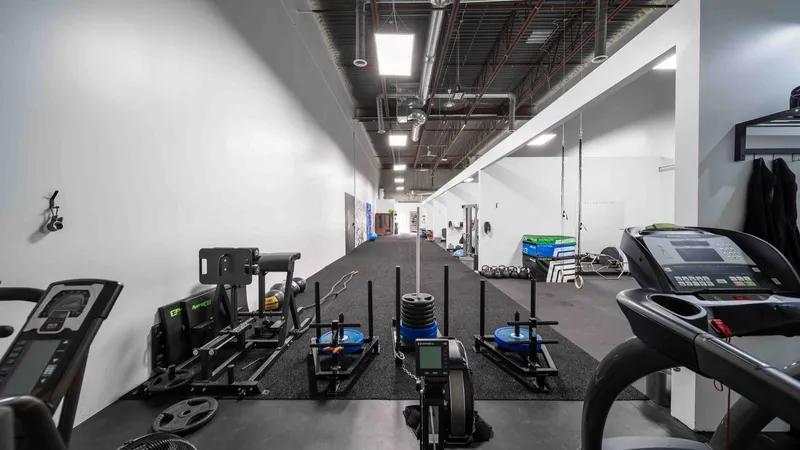
MOV-U is a semi-private personal training and nutrition studio in Edmonton, at 4906 93 Ave NW. If you are still deciding, the lowest-pressure first step is a conversation rather than a workout. Start one by phone at 587-815-8538 or through our free consultation.
A few things that make the first visit easier:
- Read the New Client Information page first, so you know what is coming.
- Have a look at the seven trainers on our team. A name and a face beforehand removes a surprising amount of nervousness.
- Our semi-private personal training page explains how the studio works.
- Rather ask privately first? Get in touch. Ask the awkward one. We would rather answer it than have it keep you home.
You do not need to get in shape before you start training. That is the thing training is for.
Frequently asked questions
Do I need to be in shape before my first personal training session?
No. Starting untrained is the most common situation in personal training, and the first session is designed to find your baseline, not exceed it. Statistics Canada data shows about half of Canadian adults do not meet recommended activity levels.
What if I can’t finish an exercise?
You tell your trainer, and they adjust. Not finishing something is information, not failure. It tells the trainer which regression, load or range of motion is the right starting point for you, which is more useful than pushing through a poor fit.
Will everyone be watching me?
Almost certainly not. In a semi-private setting each person works through their own program, so attention is on their own next set. Research on gym anxiety confirms the feeling of being watched is common, but the perceived scrutiny is far larger than the real thing.
What if I have an injury or a health condition?
Tell your trainer before you train. Pre-participation screening is an international standard through tools like the PAR-Q+, and disclosing injuries, medications or diagnoses lets a trainer select exercises around them. Sometimes screening points you to your physician first, which is the system working.
How sore will I be after the first session?
Usually mild to moderate, if at all. Delayed onset muscle soreness typically appears one to three days after a workout and rarely lasts more than five days. It is a normal response to unfamiliar activity, not an injury. Sharp or persistent pain is different and should be reported.
Can I bring a friend to my first session?
Ask when you book. Policies differ between studios, so confirm directly rather than assuming. If a familiar face would make the first visit easier, say so when you get in touch. It is a reasonable request and a common one.
Sources
- Quinn F. Understanding social gym intimidation and anxiety using the power-threat-meaning framework. Frontiers in Sports and Active Living, 2026.
- Statistics Canada. Canadian Health Measures Survey: Physical activity of Canadian adults, released 1 September 2021 (2018-2019 data).
- Canadian Society for Exercise Physiology. Canadian 24-Hour Movement Guidelines for Adults aged 18-64.
- PAR-Q+ Collaboration. Physical Activity Readiness Questionnaire for Everyone (PAR-Q+): The International Standard for Pre-Participation Screening.
- Mazzetti SA, Kraemer WJ, Volek JS, et al. The influence of direct supervision of resistance training on strength performance. Medicine & Science in Sports & Exercise, June 2000.
- Optimizing Resistance Training Outcomes: Comparing In-Person Supervision, Online Coaching, and Self-Guided Approaches: A Randomized Controlled Trial. Journal of Strength and Conditioning Research, November 2025;39(11):1129-1137.
- Cleveland Clinic. Delayed Onset Muscle Soreness (DOMS).
- Currier BS, et al. ACSM Position Stand: Resistance Training Prescription for Muscle Function, Hypertrophy, and Physical Performance in Healthy Adults. Medicine & Science in Sports & Exercise, April 2026;58(4):851-872.