Personal Training in Edmonton: The Complete Guide to Semi-Private Coaching
Personal training in Edmonton means paying a coach to build you a program, correct your technique, and hold you to a schedule. It suits beginners, people restarting after a long gap, anyone training around an injury, and lifters who have stalled. If you already train consistently, you probably do not need it.
I own a semi-private studio in Edmonton, which makes me the least neutral person you could ask. So this guide is written the way I answer the phone: the same five questions come up every week, and most callers have never been given a straight answer to any of them. Here they are, in order, with the research and the local numbers attached.
Key Takeaways
- Format decides most of the price, not talent. The City of Edmonton charges non-members $70 per session for one-on-one training and $43 for semi-private, at the same facility, from the same rate card.
- Supervision mostly buys follow-through. In a 2025 randomized trial, 88.2% of the supervised group completed at least 85% of their sessions, against 52.2% of those handed a self-guided plan.
- It works better on strength than on fat loss. A meta-analysis of 12 studies found a moderate effect of supervision on strength and a trivial effect on body composition.
- You do not need a coach’s undivided attention. The closely supervised group in the ratio research was one coach to five trainees, not one to one.
- Alberta does not regulate personal training. Anyone here can print a business card tomorrow, so ask what certification your trainer holds and who issued it.
- A gym membership is the right answer for a lot of people, especially if you already train consistently and your only real constraint is budget.
What does this guide cover?
This guide is the overview. Five companion articles go deep on the questions people actually call about: what semi-private training is, what it costs in Edmonton, whether a trainer is worth it, how coaching compares to a plain gym membership, and what happens on day one.
- What Is Semi-Private Personal Training? (And Is It Right for You?) covers the format itself, how it differs from one-on-one and from a class, and the honest tradeoffs.
- How Much Does a Personal Trainer Cost in Edmonton? covers verified local rates, why prices vary, the fees nobody quotes you, and how to judge value.
- Is a Personal Trainer Worth It? An Honest Breakdown covers the supervision research, who gets the most out of coaching, and who should not hire anyone.
- Personal Trainer vs Gym Membership: Which Is Right for You? covers the cost comparison, the adherence evidence, and the learning curve of going it alone.
- What to Expect at Your First Personal Training Session covers gym nerves, what actually happens, and what to wear and bring.
Read this page end to end if you are starting from zero. Jump to a spoke if you already know which part you are stuck on.
What is personal training, and what does it actually involve?
Personal training is paying someone to design a program for your body and your goals, coach the technique, decide how much weight goes on the bar, and keep you on a schedule. The workout is the visible part. The programming and the accountability are what you are actually buying.
That distinction is worth sitting with, because it is where most of the money goes and almost none of the marketing points. A workout makes you tired today. A program makes you stronger in March. Anyone can write you a hard hour. Far fewer can tell you what the next twelve weeks should look like and adjust it when week three goes badly.
The load call is the other piece people underrate. Deciding whether you add five pounds this week or hold and clean up the technique is a judgment made from watching you move, and it is the difference between steady progress and a plateau you cannot explain.
For context on where this fits in a normal week, the Canadian 24-Hour Movement Guidelines ask adults aged 18 to 64 for at least 150 minutes of moderate to vigorous activity plus muscle strengthening at least twice a week. Statistics Canada’s most recent measurement found 46% of Canadian adults met the activity recommendations, and 39% did strength training on at least two days that week. Training with a coach is one route to the second number. It is not the only one.
What are your options for training with a coach in Edmonton?
Edmonton gives you six realistic options, and they differ more in format than in quality. You can hire a coach one on one at a private studio, a rec centre or in your home, join a semi-private or small group session, or skip coaching and buy equipment access. Format drives most of the price.
| Format | How it works | Relative cost per session | Best if |
|---|---|---|---|
| One-on-one, private studio | The coach’s full attention for the session, program built for you | Highest | You need eyes on every rep: rehab, competition prep, or a lift you are learning under load |
| One-on-one, rec centre or YMCA | Same format, subsidized facility, usually sold in packages | High | You already pay for a facility pass and want structured coaching on top |
| One-on-one, in-home | The trainer travels to you and works with what you own | High | Travel is your main barrier and you already have some equipment |
| Semi-private | One coach, a small number of clients, each on their own program | Middle | You want individual programming and coaching eyes without the one-on-one price |
| Small group training | One coach, a larger room, programming shared or lightly scaled | Lower | You already know how to lift and want structure plus some energy in the room |
| Gym membership, no coaching | Equipment access only, you supply the program and the discipline | Lowest | You already train consistently and know exactly what you are doing |
The gap between the top and bottom rows is large, and none of it is a quality judgment. A good coach in a small group room is not worse than a mediocre one giving you undivided attention.
What is semi-private personal training?
Semi-private personal training is one coach working with a small number of clients at the same time, with every person following a program written for them rather than a shared routine. You get real coaching and individual programming at a lower cost per session than one on one, in a room with a few other people.
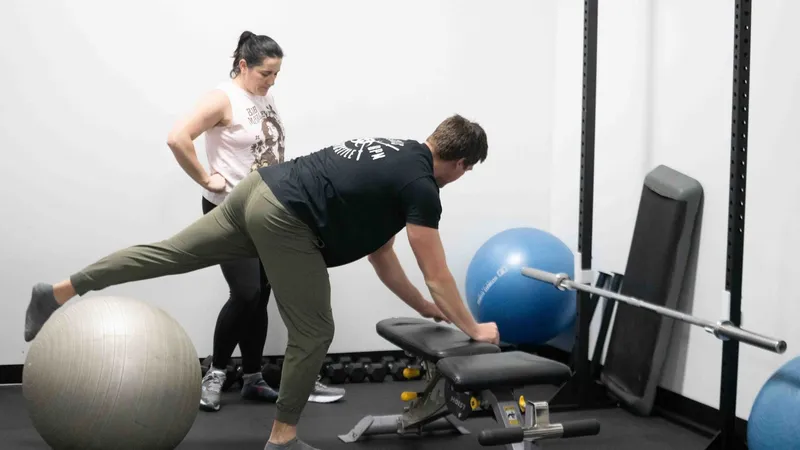
The distinction people miss is that semi-private is not a class. In a bootcamp, the board says what everyone is doing. In a semi-private session, your program might call for trap bar deadlifts and split squats while the person beside you presses and rows. The room is shared. The program is not.
Group size is the variable that decides whether that promise holds. The term is not regulated, so two studios using identical wording can run very different rooms. The American Council on Exercise treats “small-group” and “semi-private” as the same thing and notes that while industry guidelines permit up to 12 participants, the coaches it interviewed favoured 2 to 5, with 8 a practical maximum for one trainer. Past that you are in a class, whatever the sign says.
The tradeoff is simple and worth stating plainly: you give up a share of the coach’s attention and some scheduling flexibility, and you get individual programming, a lower price, and a room that makes showing up easier.
The full breakdown, including who should choose something else, is in What Is Semi-Private Personal Training? (And Is It Right for You?).
How much does a personal trainer cost in Edmonton?
Most personal training in Edmonton falls between roughly $43 and $90 per session, and format explains most of that spread. The City of Edmonton publishes $70 per session for one on one in a ten pack and $43 for semi-private. Private studios in the city quote $60 to $90 per hour.
The City of Edmonton rate card is the single most useful pricing document in this market, because it lists every format side by side in public. Non-members pay $76.50 for a single private session and $70 per session in a ten-pack. Semi-private for 2 to 4 people is $47 single and $43 at ten sessions. Small group of 5 to 10 people is $22. Continuous Monthly and Annual Pass holders pay materially less across all three.
Private studios sit at or above the municipal rate. Zone 105, an Edmonton facility, states plainly that its trainers cost $60 to $90 per hour.
Two things that number does not tell you. First, the advertised rate is rarely the total: package expiry dates, separate assessment fees, facility access charges and GST all move your real cost per session. Second, price per session is the wrong metric anyway. The number that decides whether you got value is the price per session you actually attended.
The complete rate comparison, the hidden fees to ask about, and the package math are in How Much Does a Personal Trainer Cost in Edmonton?.
Is a personal trainer worth it?
Sometimes. Supervised training reliably produces bigger strength gains and much better follow through than training alone, while its effect on body composition is small. If you already train consistently and your numbers keep climbing, a trainer is a luxury. If you stall, skip or guess, it is probably worth the money.
The strongest single piece of evidence is a 2025 randomized controlled trial in the Journal of Strength and Conditioning Research, which put 79 adults through ten weeks of resistance training under in-person supervision, app-based coaching, or a self-guided PDF. 88.2% of the supervised group completed at least 85% of their sessions, compared with 52.2% of those following a self-guided plan. Two caveats keep that honest: the supervised arm was small, 17 people, and everyone in the study already had at least a year of lifting behind them. It is evidence about experienced adults, not beginners.
The mechanism shows up in older work too. Over 12 weeks of the identical program, directly supervised lifters used significantly heavier loads and finished with greater maximal squat and bench press strength than unsupervised lifters.
Now the part that costs me money to publish. A meta-analysis of 12 studies found supervision produced a moderate effect on strength and a trivial effect on body composition. If fat loss is your only goal, your food is the higher-leverage purchase, not me.
The full case, including the four groups who get the most value and the four who should keep their money, is in Is a Personal Trainer Worth It? An Honest Breakdown.
Personal trainer vs gym membership
Buy the membership if you already know how to train and simply need somewhere to do it. Hire a coach if you do not know what to do, or you know exactly what to do and keep not doing it. A gym sells access. A trainer sells technique and adherence. Those are different products.
Most people compare them on price, which is the wrong axis. A City of Edmonton recreation centre pass runs $48 or $74 per month depending on tier, GST included, and private gyms in the city run from budget chains below that to premium clubs well above. Set against a $43 to $90 training session, the membership looks unanswerable.
Then divide by attendance. A membership you use twice in a month is not cheap, it is the most expensive training you will ever buy. Cost per completed workout is the only comparison that means anything, and it is the one number nobody puts on a sign.
So the real question is which gap you have. If it is equipment access, a membership closes it completely and paying a coach to watch you run a program you already know is a poor use of money. If you have bought a membership twice and neither lasted past March, a third one is unlikely to behave differently. That is an adherence problem, and adherence is the thing supervision measurably improves.
The side-by-side comparison across cost, accountability, learning curve and flexibility is in Personal Trainer vs Gym Membership: Which Is Right for You?.
What happens at your first personal training session?
Mostly talking. A first session usually covers your health history and goals, a look at how you move through a few basic patterns, a short and manageable workout, then a plan for the coming weeks. Nobody tests you to failure, and nobody expects you to arrive fit.
The nerves are close to universal and worth naming. Research published in Frontiers in Sports and Active Living cites a 2025 UK survey in which 47% of respondents felt uncomfortable at the thought of joining a gym and 32% expected to be negatively judged. That is a normal social response to walking into a room where everyone else knows the rules, not a personal failing.
Two practical things. Wear whatever you can squat, bend and reach overhead in, with clean indoor shoes, and bring water. There is no correct outfit. And mention the thing that hurts, because the bad knee or the clicking shoulder changes exercise selection, which is most of the reason to hire a coach in the first place.
A well-run first session leaves you able to walk normally to your car. The goal on day one is information and a reason to come back, not to bury you.
The full walk-through, including what the trainer will ask and how sore you should expect to be, is in What to Expect at Your First Personal Training Session.
How do you know which option is right for you?
Start with the problem you actually have rather than the format you like the sound of. If your gap is knowing what to do, you need programming. If your gap is doing it, you need a booked appointment. If your gap is only equipment, you need a membership and nothing more.
| If this sounds like you | Start here |
|---|---|
| You keep seeing “semi-private” advertised and cannot tell whether it is a class | What semi-private personal training actually is |
| Price is your first question and nobody in this city will give you a number | What personal training costs in Edmonton |
| You are not convinced coaching is worth paying for at all | Whether a personal trainer is worth it |
| You already have a gym membership and wonder whether that is enough | Personal trainer versus gym membership |
| You have decided to go, and now you are nervous about walking in | What happens at a first session |
One more piece of evidence for anyone stuck between one-on-one and semi-private. When 124 untrained men trained for 11 weeks at either a 1:5 or a 1:25 coach-to-trainee ratio, the closely supervised group gained 15.9% on bench press against 10.22%. The effective condition there was one coach to five people. You do not need undivided attention to capture most of the benefit. You need a coach who can actually see you.
What makes the Edmonton personal training market different?
Two things set Edmonton apart. The City publishes a full public rate card covering every training format, which almost no private studio here does, so you can price check one end of the market precisely and the other not at all. And Alberta does not regulate personal training.
Start with the pricing asymmetry, because it shapes every conversation you will have. The City of Edmonton lists private, semi-private, small group and consultation rates in public, with member and non-member columns. The YMCA of Northern Alberta publishes package pricing. Almost every private studio in this city, including plenty I respect, publishes nothing and asks you to book a call. Some of that is legitimate, since a rate without context can mislead. Most of it is a sales process. Either way, you can walk into any negotiation already knowing what the municipal benchmark is, which is a genuine advantage Edmonton buyers have and most do not use.
Then the regulation gap, which matters more. The Government of Alberta lists personal trainer certification as “Not regulated”, and notes that although it is not required by law, the industry standard here is Certified Fitness Trainer certification from Fitness Alberta. Meanwhile a CSEP Certified Personal Trainer requires the equivalent of two years of full-time post-secondary study plus theory and practical exams. Both people can legally call themselves a personal trainer in this province, and so can someone who holds neither. The title tells you nothing. The issuing body tells you a lot.
Two smaller local details. Personal training is a taxable service, and any established studio is past the Canada Revenue Agency’s $30,000 small-supplier threshold, so ask whether a quoted rate includes GST. Alberta charges 5% with no provincial sales tax, which is the one piece of good news in this paragraph.
And the winter, which is not a statistic but is the thing I would weigh most heavily if I were choosing here. Edmonton takes outdoor training off the table for months, and it is dark when you leave work. Motivation that survives July often does not survive January. A booked appointment with a person expecting you is worth more in this city than it would be somewhere mild, and any honest assessment of whether you will keep showing up should be made in February rather than in May.
How do you choose a personal trainer in Edmonton?
Three answers tell you most of what you need: what the rate is, how many people share the coach during your session, and what certification the trainer holds and who issued it. Any studio worth your money answers all three plainly on the phone, without booking you a sales appointment first.
Ask for the rate directly. Not a range, not a starting-from figure, and confirm whether it includes GST. “Come in and we will discuss it” is a sales process, not a pricing model. Every studio should be able to say in one sentence what you get and why it costs that.
Ask for the number in the room. If a studio calls itself semi-private, ask how many clients one trainer works with at once, and ask whether your program is written for you or shared with the person beside you. A studio that dodges the ratio question is usually dodging it because the number is bigger than you would like.
Ask what the certification is and who issued it. Given that Alberta does not regulate the field, this is the single most useful question a prospective client can ask, and the one asked least. A good coach answers plainly and volunteers their liability insurance and current first aid without being prompted. Anyone who gets defensive has already answered.
The longer checklists, including expiry dates, cancellation terms and trial sessions, are in the cost guide and the semi-private guide. Put every one of those questions to us as well.
Training at MOV-U
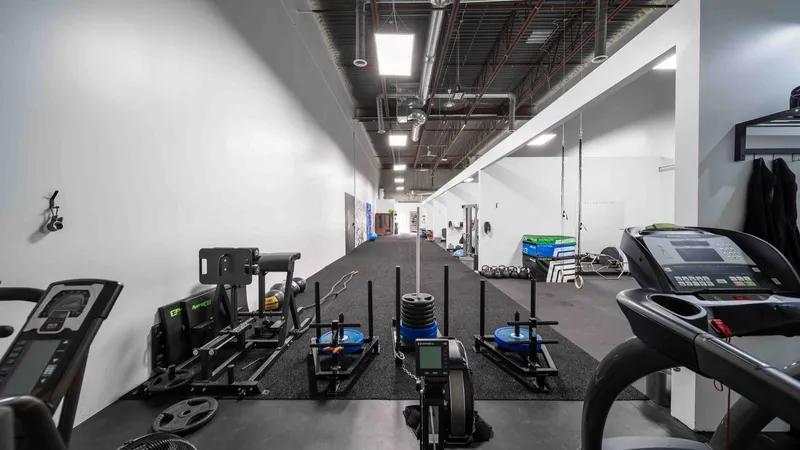
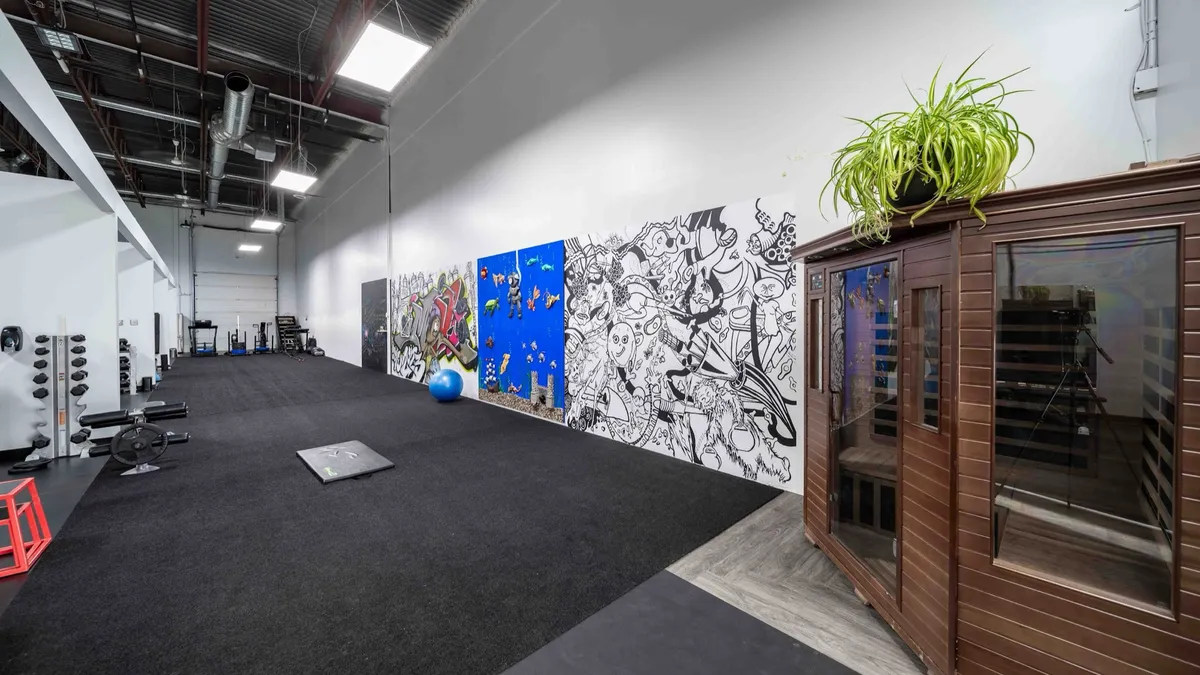
MOV-U is a semi-private personal training and nutrition studio at 4906 93 Ave NW in Edmonton. Seven trainers work here: Mackenzie Clarke, Christine Clarke, Kerri Bodie, Luke Toennies, Cassidy Godue, Abi Leach and Skylar Goodwin. The quickest way to find out whether we suit you is to call and ask.
The way we describe the format on our semi-private personal training page is that you are doing your own customized workout with a trainer supervising your form and progress. If you would rather talk before you train, start with a free consultation or read the new client information first.
You can meet the trainers, call the studio at 587-815-8538, or get in touch with the awkward question you have not wanted to ask anyone. If we are not the right fit for you, we would rather say so than take your money.
Frequently asked questions
These are the questions we field most often on the phone, answered as directly as we can. Where a full answer needs more room than a paragraph allows, the linked guide above covers it properly. If yours is not here, call the studio and ask it directly.
What should I look for in a personal trainer in Edmonton?
Ask three things before anything else: what the rate is including GST, how many clients the coach works with during your session, and what certification they hold and who issued it. How readily those answers come tells you more than any website. A good coach also volunteers their liability insurance and current first aid without being asked.
What certification should an Edmonton personal trainer have?
There is no legal requirement. The Government of Alberta lists personal trainer certification as “Not regulated” and notes the industry standard here is Certified Fitness Trainer certification from Fitness Alberta. A CSEP Certified Personal Trainer requires roughly two years of post-secondary study plus theory and practical exams. Ask which one your trainer holds.
What is the most affordable way to work with a coach in Edmonton?
Small group training is the cheapest coached format, at $22 per session for non-members on the City of Edmonton rate card, with semi-private next at $43 per session in a ten-pack. One-on-one is the premium tier at $70 and up. Cheaper still is a membership and a free structured program, if you will genuinely follow it.
Is semi-private training a good fit for a complete beginner?
Usually yes. Because your program is written for you rather than for the room, your starting point is the plan’s starting point, and there is no group pace to fall behind. Beginners often find a small room easier to walk into than a packed weight floor. Active rehab under clinical direction is the main exception.
Can I keep my gym membership and work with a trainer?
Yes, and plenty of people do exactly that. A common arrangement is coached sessions on the two days you can reliably protect, plus solo sessions at your gym on whatever else opens up. Just compare your all-in monthly cost rather than the session rate when you decide how many coached sessions you need.
Does personal training include nutrition coaching?
It varies by studio, so ask before you assume either way. Some sell training and nutrition separately, some bundle them, and the scope of what a non-dietitian can advise on is limited in Alberta. MOV-U is a personal training and nutrition studio, so ask us what the nutrition side includes when you get in touch.
Where is MOV-U located, and how do I get started?
MOV-U is at 4906 93 Ave NW, Edmonton, AB T6B 2L6. Call 587-815-8538 or use the contact page on our site. If you would rather talk before committing to anything, ask about a free consultation, and read the new client information page first so you know what is coming.
Sources
- City of Edmonton. “Personal Training Services.” edmonton.ca
- City of Edmonton. “Admission and Memberships.” edmonton.ca
- Zone 105. “Personal Training,” Edmonton. zone105.ca
- Government of Alberta. “Occupations in Alberta: Personal Trainer,” alis. alis.alberta.ca
- Canadian Society for Exercise Physiology. “CSEP Certified Personal Trainer: Application Requirements and Certification Process.” csep.ca
- Gavanda S, Held S, Schrey S, et al. “Optimizing Resistance Training Outcomes: Comparing In-Person Supervision, Online Coaching, and Self-Guided Approaches: A Randomized Controlled Trial.” Journal of Strength and Conditioning Research 39(11):1129-1137, 2025. Full text on PubMed Central
- Mazzetti SA, Kraemer WJ, Volek JS, et al. “The influence of direct supervision of resistance training on strength performance.” Medicine & Science in Sports & Exercise 32(6):1175-1184, 2000. pubmed.ncbi.nlm.nih.gov
- Fisher JP, Steele J, Wolf M, et al. “The Role of Supervision in Resistance Training: An Exploratory Systematic Review and Meta-Analysis.” International Journal of Strength and Conditioning, 2022. journal.iusca.org
- Gentil P, Bottaro M. “Influence of supervision ratio on muscle adaptations to resistance training in nontrained subjects.” Journal of Strength and Conditioning Research 24(3):639-643, 2010. pubmed.ncbi.nlm.nih.gov
- Myers C. “Small-group Training: Are You Ready to Take the Leap?” ACE Certified, American Council on Exercise, February 2019. acefitness.org
- Statistics Canada. “Directly measured physical activity and sedentary time in Canada, 2022 to 2024.” Canadian Health Measures Survey, released 17 October 2025. statcan.gc.ca
- Canadian Society for Exercise Physiology. “Canadian 24-Hour Movement Guidelines for Adults aged 18-64 years.” csepguidelines.ca
- Quinn F. “Understanding social gym intimidation and anxiety using the power-threat-meaning framework.” Frontiers in Sports and Active Living, 2026. pmc.ncbi.nlm.nih.gov
- Canada Revenue Agency. “When to register for and start charging the GST/HST.” canada.ca
Written by Mackenzie Clarke, Owner-Operator of MOV-U, a semi-private personal training and nutrition studio at 4906 93 Ave NW, Edmonton, AB T6B 2L6. Call 587-815-8538. All third-party rates cited were published by the named organizations at the time of writing and are subject to change.