Personal Trainer vs Gym Membership: Which Is Right for You?
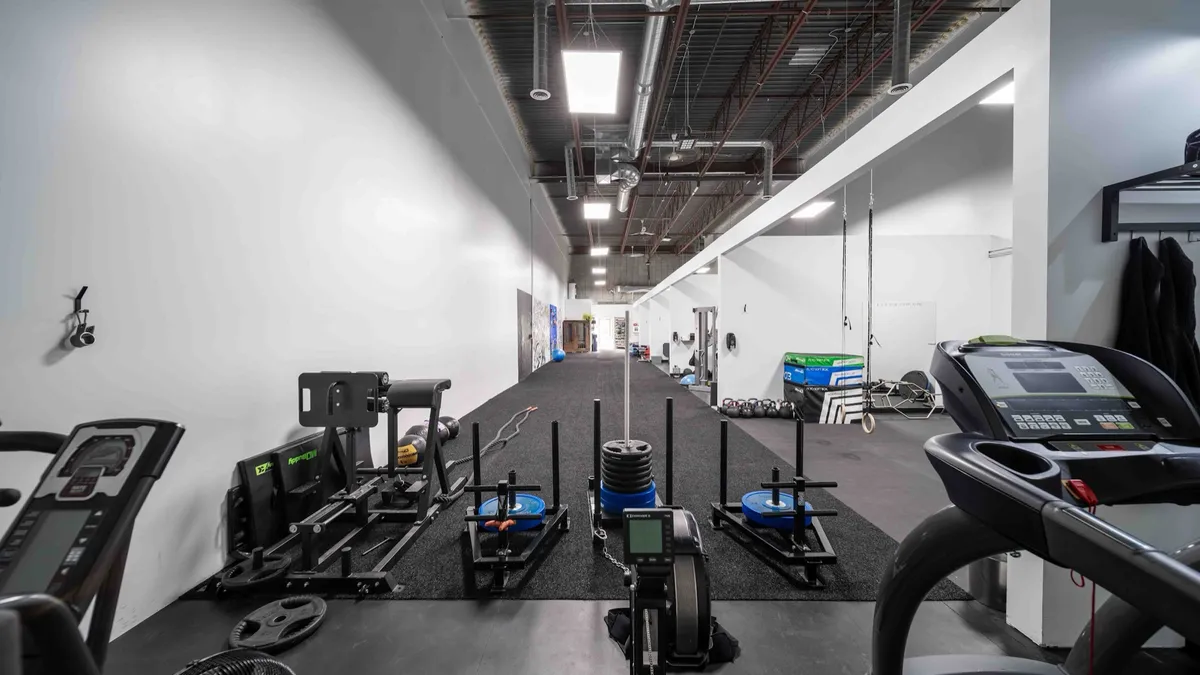
Get a gym membership if you already know how to train and just need somewhere to do it. Hire a personal trainer if you don’t know what to do, or you know what to do and keep not doing it. The gym sells access. A trainer sells adherence and technique. Those are different products.
Key Takeaways
- A gym membership is cheap per month and expensive per workout you skip. Its real price is the monthly fee divided by how often you actually show up.
- Supervision mostly buys consistency, not magic. In a 2025 randomized trial, 88.2% of the coached group completed at least 85% of their sessions, versus 52.2% of the people handed a written plan.
- It matters most on technical lifts. That trial found supervised squat gains beat both alternatives, while bench press gains were statistically similar across all three groups.
- A membership is the right answer for a lot of people, especially experienced lifters, shift workers, and anyone whose main constraint is budget.
- Semi-private sits between the two, giving you a coach watching your form without the cost structure of one-on-one.
What’s the actual difference between a gym membership and a personal trainer?
A gym membership buys you access to equipment. A personal trainer buys you a program, technique coaching, and a scheduled appointment. Most people compare them on price, which is the wrong axis. The better question is which gap you actually have: equipment access, or knowing what to do and doing it consistently.
If your only barrier is that you don’t own a squat rack, a membership solves your problem completely. Paying a coach to watch you run a program you already know is a poor use of money.
But most people searching “personal trainer vs gym” aren’t equipment-constrained. They’ve had a membership before. It didn’t stick. That’s a different problem, and more equipment won’t fix it.
How do the costs really compare?
A gym membership is a low fixed monthly cost. Personal training is a higher variable cost billed per session. The number that actually matters is cost per completed workout, not cost per month. A membership you use twice is not cheap. It’s the most expensive training you’ll buy.
The clearest evidence comes from an American Economic Review study of 7,752 health club members across three clubs over three years. Members paying a flat monthly fee over $70 USD attended 4.3 times per month. That worked out to more than $17 USD per visit, though a 10-visit pass at the same clubs cost $10 USD per visit. On average they gave up roughly $600 USD over the membership by picking the wrong contract for their real behaviour.
The dollar figures are American and from 2006, so don’t read them as Edmonton prices. The pattern is what transfers: people overestimate how often they’ll go, and pay for that optimism monthly.
For a local anchor, the City of Edmonton publishes its recreation centre rates: adult single admission $9.75 on the Value tier or $13.25 on Benefits Plus, continuous monthly $48 or $74, annual $530 or $793, GST included. Private gyms in Edmonton run from budget chains below that to premium clubs well above it, and rates change often enough to confirm directly before signing.
Personal training rates vary just as widely by format and frequency. We break the Edmonton picture down in our guide to what personal training costs in Edmonton.
Does having a trainer actually get better results?
Yes, and the effect is measurable, but it is smaller and more specific than the fitness industry usually implies. A 2025 randomized controlled trial published in the Journal of Strength and Conditioning Research compared three groups over ten weeks: in-person supervised coaching, app-based online coaching, and a self-guided written plan.
The adherence gap was the headline. Of the supervised participants, 88.2% completed at least 85% of their sessions. Among the app-guided group it was 81.2%. In the self-guided group, handed a static PDF with the same exercises, sets, reps, and progression rules, only 52.2% got that far.
Strength outcomes split in a telling way. Squat 1-rep max rose by 26.6 kg in the supervised group versus 19.2 kg app-guided and 19.4 kg self-guided, and the supervised advantage was statistically significant. Bench press improved in every group with no significant difference between them.
That split is the honest version. Supervision helped most on the complex lift and made little measurable difference on the simpler one. An older study in Medicine & Science in Sports & Exercise found the mechanism: over 12 weeks, supervised lifters used significantly heavier loads and finished with significantly greater maximal squat and bench press strength than unsupervised lifters. Coaching mostly works by getting you to train harder than you would alone.
One caveat: the 2025 trial recruited people with at least a year of lifting experience. If already-trained adults lose that much adherence alone, the gap for a beginner is unlikely to be smaller.
Personal trainer vs gym membership: side-by-side
Here is the honest comparison on the five factors that decide this for most people. Neither column is the winner. They win on different things, and which column fits depends entirely on which of these five you’re currently failing at.
| Gym membership | Personal trainer | |
|---|---|---|
| Cost structure | Low fixed monthly fee, paid whether or not you attend. Cheap per month, expensive per workout. | Billed per session. You pay for use, so cost per completed workout stays predictable. |
| Accountability | Entirely self-generated. Nobody notices if you stop. | Built in. A booked appointment with a person expecting you. |
| Learning curve | Steep if you’re new. You pick the program, the loads, and the technique, and self-correct. | Handled for you. Program design and form correction happen in real time. |
| Flexibility | Very high. Any hour the doors are open, same-day changes, travel-friendly with chain access. | Lower. Sessions are booked ahead and tied to a location and a coach’s calendar. |
| Best for | Experienced lifters, shift workers, anyone already training consistently, and anyone whose main constraint is budget. | Beginners, people returning after a long gap, anyone working around an injury, repeat starters, and lifters stuck on a plateau. |
How steep is the learning curve on your own?
Steeper than most gyms admit, but not insurmountable. The Canadian 24-Hour Movement Guidelines ask adults aged 18 to 64 for at least 150 minutes per week of moderate to vigorous activity plus muscle strengthening at least twice a week. Translating that into sets, loads, and progression is where most self-directed programs fall apart.
The hard part isn’t finding a program. Free, well-designed programs are everywhere. It’s the two things a written plan can’t do: tell you whether your hip hinge is actually a hinge, and decide how much weight to add this week when last week felt harder than it should have.
Some people close that gap with video, patience, and a willingness to train light while they learn. Plenty of strong lifters taught themselves. If that’s how you like to learn, a membership genuinely is enough.
Why does accountability decide most of this?
Because the program you follow beats the program you optimize. Statistics Canada’s activity monitor data found that about one in two Canadian adults aged 18 to 79 meet the 150-minute weekly activity target. The gap between people who train and people who don’t is rarely a knowledge gap. It’s a showing-up gap.
This is where booked sessions do their work. A systematic review of 172 studies found average dropout from supervised high-intensity interval programs was 12.9%, and 11.8% across 76 studies of supervised moderate-intensity training. Compare that to the 52.2% adherence the 2025 trial recorded among people left to a plan.
An appointment changes the decision. Skipping a workout is easy. Cancelling on a person is not.
Which option is more flexible?
The gym wins this one outright, and it isn’t close. A membership lets you train at 5 a.m. or 10 p.m., move your session an hour before it starts, and switch what you’re doing on a whim. Personal training runs on a booked schedule tied to a coach’s calendar and a physical location.
If your work rotates, you travel often, or your week genuinely can’t be planned ahead, weigh that heavily. Some people solve it with a hybrid: coached sessions on the two days they can reliably protect, solo sessions on whatever else opens up.
Just get the gym membership if any of these describe you
Genuinely, skip the trainer for now if you fit here. You’ll save money and get the same result. A membership is the correct answer more often than trainers like to say, and buying coaching you don’t need is a fast way to conclude that coaching doesn’t work.
- You already train consistently. Two or more sessions a week for the last six months, with nobody reminding you, means accountability isn’t your bottleneck.
- You have a program and you understand it. You know what you’re doing next session and why the loads are what they are.
- Budget is your binding constraint. A membership you can afford for two years beats coaching you can afford for six weeks.
- Your schedule is genuinely unpredictable. Rotating shifts and heavy travel make booked sessions frustrating rather than helpful.
- You like training alone. Some people find supervision intrusive. That’s a legitimate preference, not a character flaw.
If two or three fit, get the membership. Come back to coaching later if you plateau or your goals sharpen.
Who is personal training actually worth it for?
Coaching earns its cost when your problem is technique, consistency, or working around a limitation. It’s poor value when your problem is only equipment access. The clearest cases are beginners, people restarting after a long break, anyone training around an injury, and lifters who have stalled and can’t diagnose why.
The repeat-starter case is the most common one we see. If you’ve bought a membership more than twice and neither lasted past March, a third is unlikely to work. That’s an adherence problem, and adherence is what supervision measurably improves. We go deeper in is a personal trainer worth it.
Where does semi-private training fit?
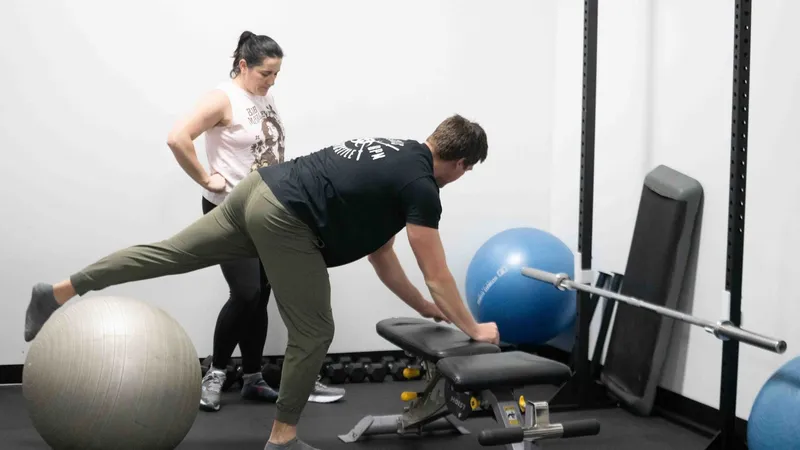
Semi-private sits between the two options and answers the cost objection without giving up the coaching. At MOV-U, you’re doing your own customized workout with a trainer supervising your form and progress, alongside other people running their own programs. It isn’t a group class, where everyone follows the same workout.
That structure keeps both mechanisms the research points to: a booked appointment, and someone correcting the squat rather than leaving you to guess. We explain the format in what semi-private personal training is and on our personal training page.
If you want to talk it through without committing, we offer a free consultation. Start with our new client information, or read what to expect in a first session. Reach the studio at 587-815-8538 or through our contact page. We’re at 4906 93 Ave NW in Edmonton.
If you finished this and concluded a membership is your answer, good. Go train.
Frequently asked questions
Is a personal trainer worth it if I already go to the gym regularly?
Often not. If you’re already training consistently, you’ve solved the hardest problem, and a trainer’s biggest measured benefit is adherence you already have. Coaching still makes sense if you’ve plateaued, want to learn a technical lift properly, or are training around an injury. Otherwise, keep your membership.
How much does a personal trainer cost in Edmonton compared to a gym membership?
Personal training costs more per session than a membership costs per month, and rates vary by studio, format, and frequency. Semi-private and small-group formats usually cost less per session than one-on-one. Compare cost per completed workout rather than cost per month, and confirm rates directly.
Can I get good results with just a gym membership?
Yes. Many people do. You need a structured program, progressive overload, and enough consistency to accumulate months of work. A 2025 trial found self-guided lifters made real strength gains, just smaller ones on the squat and with far lower adherence than supervised lifters. If you can supply the structure and consistency yourself, a membership is enough.
Is semi-private personal training the same as a group fitness class?
No. In a group class, everyone does the same workout. In semi-private training at MOV-U, you’re doing your own customized workout with a trainer supervising your form and progress, while other people work through their own programs in the same space.
What’s the biggest reason gym memberships fail?
Overestimating future attendance. A landmark study of 7,752 US health club members found people on flat monthly contracts attended about 4.3 times a month and would have saved money on pay-per-visit passes, forgoing roughly $600 USD on average. The membership doesn’t fail. The plan to use it does.
How long do I need to work with a personal trainer?
It depends on your starting point and goal. Some people work with a coach until they can confidently run a program alone, then switch to a membership. Others keep coached sessions long term for the accountability. Both are reasonable. Discuss your timeline in a consultation rather than committing blind.
Written by Mackenzie Clarke, Owner-Operator of MOV-U, a semi-private personal training and nutrition studio at 4906 93 Ave NW, Edmonton, AB T6B 2L6.
Sources
- Gavanda S, Held S, Schrey S, Oberwetter K, Lazzaro P-GM, Pergelt M, Geisler S. “Optimizing Resistance Training Outcomes: Comparing In-Person Supervision, Online Coaching, and Self-Guided Approaches: A Randomized Controlled Trial.” Journal of Strength and Conditioning Research 39(11):1129-1137, 2025. https://pmc.ncbi.nlm.nih.gov/articles/PMC12529976/
- Mazzetti SA, Kraemer WJ, Volek JS, et al. “The influence of direct supervision of resistance training on strength performance.” Medicine & Science in Sports & Exercise 32(6):1175-1184, 2000. https://pubmed.ncbi.nlm.nih.gov/10862549/
- DellaVigna S, Malmendier U. “Paying Not to Go to the Gym.” American Economic Review 96(3):694-719, 2006. https://www.aeaweb.org/articles?id=10.1257%2Faer.96.3.694
- Santos A, Braaten K, MacPherson M, et al. “Rates of compliance and adherence to high-intensity interval training: a systematic review and meta-analyses.” International Journal of Behavioral Nutrition and Physical Activity 20:134, 2023. https://pmc.ncbi.nlm.nih.gov/articles/PMC10664287/
- Statistics Canada. “Canadian Health Measures Survey: Activity monitor data, 2018-2019.” Released 2021-09-01. https://www150.statcan.gc.ca/n1/daily-quotidien/210901/dq210901c-eng.htm
- Canadian Society for Exercise Physiology. “Canadian 24-Hour Movement Guidelines for Adults aged 18-64 years.” https://csepguidelines.ca/guidelines/adults-18-64/
- City of Edmonton. “Admission and Memberships.” https://www.edmonton.ca/activities_parks_recreation/admission-memberships