What Is Semi-Private Personal Training? (And Is It Right for You?)
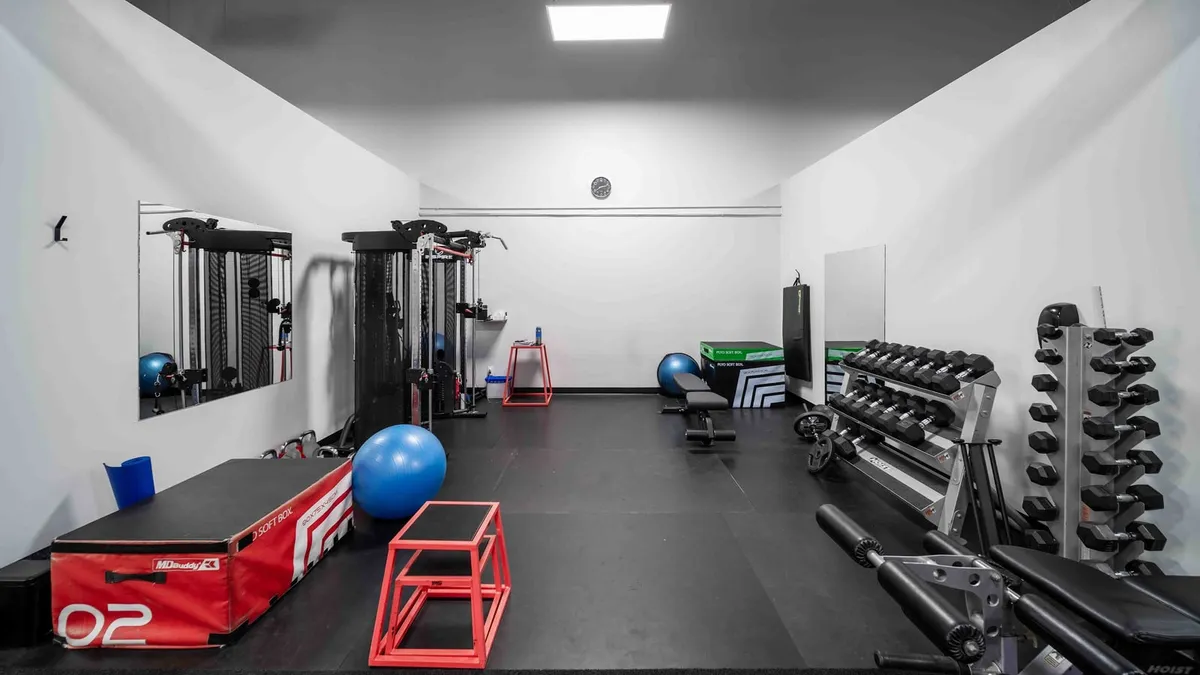
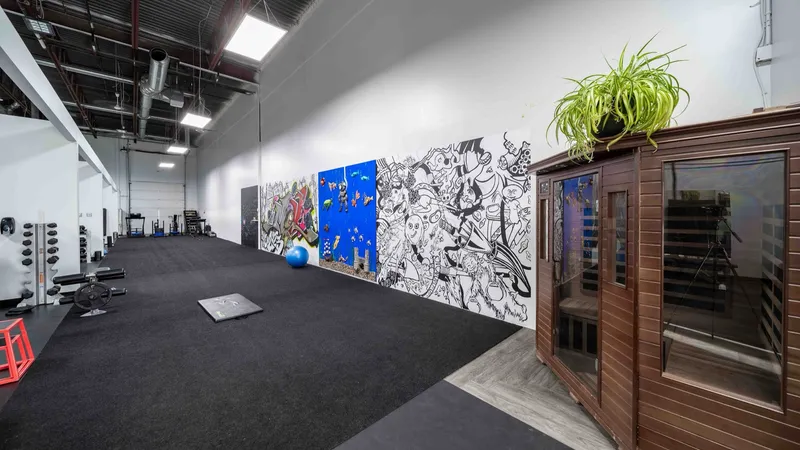
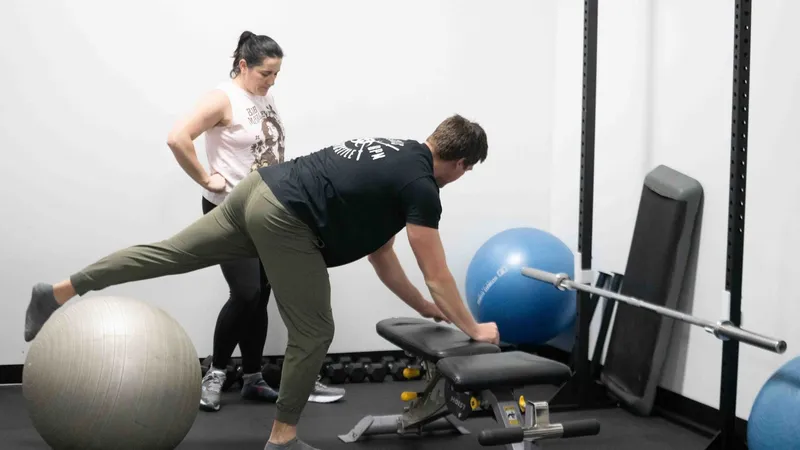
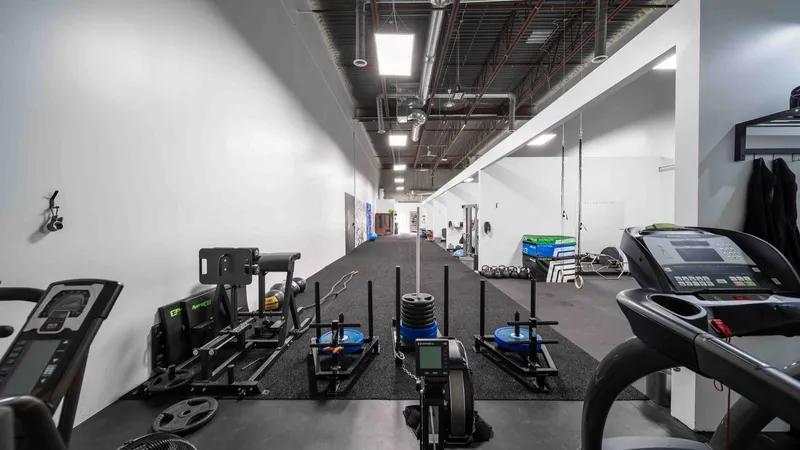
Semi-private personal training is one trainer coaching a small number of clients in the same session, with each person working through their own individual program instead of a shared routine. You get hands-on coaching, form correction and real progression, at a lower cost per session than one-on-one, with a few other people training beside you.
Almost nobody explains this properly, so people either walk in expecting a bootcamp or assume it is watered-down personal training and never try it. Here is the honest version: what it is, who it works for, and who should choose something else.
Key Takeaways
- Semi-private is not a class. One trainer, a few clients, and every person is on their own program.
- The ratio is small by design. The American Council on Exercise notes guidelines allow up to 12 people, but the trainers it interviewed said 2 to 5 works best.
- You trade a slice of the coach’s attention for a lower per-session cost and a room with other people in it. That trade is the whole decision.
- Supervision measurably changes outcomes. In a 2025 randomized trial, 88.2% of the supervised group completed at least 85% of their sessions, versus 52.2% of those training on their own.
- It is wrong for some people. Complex rehab, sport prep, or a need for privacy and undivided attention all point to one-on-one.
What is semi-private personal training?
Semi-private personal training is a coaching format where one trainer runs a session for a small group, and each client follows a program written for them specifically. Nobody is following along with the person next to them. The trainer moves between clients, cues technique, adjusts loads, and tracks progress individually.
The term gets used loosely. The American Council on Exercise treats “small-group training” and “semi-private training” as the same thing, and notes that while guidelines permit up to 12 participants, the coaches it spoke to felt 2 to 5 works best, with 8 the hard maximum before quality drops. Past that range you are in a class, whatever the sign on the door says.
At MOV-U the framing we use is simple: you are doing your own customized workout with a trainer supervising your form and progress. The room is shared. The program is not.
How is semi-private training different from one-on-one training?
In one-on-one training, the trainer’s attention is yours for the entire session. In semi-private, that attention rotates. You still get a program built for you, coaching on every lift that needs it, and someone tracking your numbers, but there will be stretches where the trainer is with someone else while you work through a set.
For most healthy adults chasing general strength or fat loss, that rotation is not a problem. You do not need a coach staring at you through a set of goblet squats. You need them for the setup, the first working set, the load call, and the moments where technique starts to break down.
The gap matters when every rep needs eyes on it. A lifter learning to hinge under load, someone rebuilding after a serious injury, or an athlete refining a competition lift all benefit from undivided attention. If that is you, one-on-one is worth the difference. We break the value question down further in Is a Personal Trainer Worth It?
How is semi-private training different from a group class or bootcamp?
A group class gives everyone the same workout. The instructor leads from the front, the programming is written for the average person in the room, and scaling usually means “go lighter” or “do the easier version.” Semi-private inverts that: the programming starts with you, and the group is just the setting.
This is the distinction people miss most. In a bootcamp, if the board says 3 rounds of thrusters and burpees, that is what you are doing, whether or not your shoulder agrees. In a semi-private session, your program might call for trap bar deadlifts and split squats while the person beside you does incline press and rows.
The other difference is progression. A class is built to be repeatable by whoever shows up that day. A semi-private program is built to change over weeks, with loads and volumes moving in a deliberate direction. That is why a class can feel great and still leave you at the same weights six months later.
Semi-private vs one-on-one vs group classes: a side-by-side look
| One-on-one | Semi-private | Group class or bootcamp | |
|---|---|---|---|
| Program | Built for you | Built for you | Same for everyone |
| Coach attention | Undivided | Rotating, small group | Led from the front |
| Cost per session | Highest | Middle | Lowest |
| Social energy | Just you and the coach | Small, familiar group | Large, high energy |
| Best for | Rehab, technical lifts, privacy | General strength, fat loss, accountability | Cardio conditioning, variety, fun |
| Weak spot | Price | Attention is shared | No individual programming |
Still deciding whether coaching of any kind beats going it alone? Personal Trainer vs Gym Membership works through that comparison.
Does having a trainer in the room actually change your results?
Yes, and the effect is larger than most people expect. A 2025 randomized controlled trial in the Journal of Strength and Conditioning Research put 79 trained adults through 10 weeks of full-body resistance training under three conditions: in-person supervision, app-guided coaching, or a self-guided PDF program. Of the supervised group, 88.2% completed at least 85% of their sessions. The app-guided group came in at 81.2%, and the self-guided group at 52.2%.
That gap is the headline, because a program you do not do produces nothing. The same trial found supervised training also produced better strength, body composition and well-being outcomes. It backs an older finding: in a 2000 study in Medicine & Science in Sports & Exercise, lifters under direct supervision used significantly heavier loads and finished with greater maximal squat and bench press strength than lifters running the identical program unsupervised.
Retention points the same way. A 2026 study in Frontiers in Public Health followed 587 clients at a supervised small-group studio over seven years and found mean participation of 13.8 months, with 51.7% still training at 12 months. That is one studio in Brazil, so treat it as directional. Still, lasting past a year is not the norm in this industry.
Why it matters here: Statistics Canada’s Canadian Health Measures Survey, released in October 2025, found 46% of adults met physical activity recommendations, and 39% did strength training on at least two days that week. The Canadian 24-Hour Movement Guidelines ask for 150 minutes of moderate to vigorous activity plus muscle strengthening twice weekly. Most do not get there alone. The American College of Sports Medicine’s 2026 survey of 2,000 exercise professionals still ranks traditional strength training among the field’s top trends.
Who is semi-private personal training best for?
Semi-private suits people who want individual programming and real coaching but do not need, or do not want to pay for, undivided attention. If you know you will skip the gym when nobody is expecting you, and a big-box gym floor makes you want to leave, this format tends to fit well.
The people who thrive in semi-private:
- Returners. You trained before, life happened, and you want a plan instead of guesswork.
- Beginners who dislike crowds. A small room with familiar faces beats a packed weight floor.
- Accountability-driven trainees. You show up for a booked session with a coach who notices when you do not.
- People with a budget ceiling. You want coaching, and one-on-one is out of reach.
- Anyone who likes company without choreography. People around you, not a routine imposed on you.
If your goal is more specific than “get stronger and feel better,” the goal-setting piece in Personal Training for Your Goals is a useful next read.
Who should skip semi-private training?
Some people are genuinely better served elsewhere, and any honest studio will tell you so. If you need continuous hands-on attention, a medically directed protocol, or complete privacy, semi-private is the wrong tool, and paying for it anyway usually ends in a quiet cancellation three months later.
Choose something else if:
- You are in active rehab under clinical direction. Follow your practitioner’s plan with a trainer who can give you the full session.
- You are preparing for competition. Technical lifts and sport-specific prep need undivided eyes.
- You want anonymity. Other people will see you train, learn your name, and notice when you miss.
- You need maximum sessions for minimum spend. A membership plus a solid program stretches a tight budget further, even if adherence is harder.
- Your schedule is genuinely unpredictable. Semi-private runs on booked slots, so you will lose value.
What are the honest tradeoffs of semi-private training?
Every format costs you something. Semi-private costs you a share of the trainer’s attention, some scheduling flexibility, and occasionally a piece of equipment you wanted right now. In exchange you get individual programming, a lower per-session price than one-on-one, and a room that makes showing up easier.
Worth knowing before you commit:
- Attention is split. On a busy day you will have solo sets. That is the design, not a service failure.
- You share equipment. Good studios program around this, but you will sometimes swap two exercises.
- Sessions are booked. The structure that creates accountability is the same structure that limits spontaneity.
- The social element cuts both ways. Most people find it motivating. Some find it draining. You will know within two or three sessions.
- Ratios vary widely. “Semi-private” is not a regulated term, so two studios using the same words can run very different rooms.
What should you ask before signing up anywhere?
Ask about the ratio, the programming, and the coach. Those three answers tell you almost everything, and any studio worth training at will answer them plainly. If a studio dodges the ratio question, it is usually because the number is bigger than you would like.
The short list:
- How many clients does one trainer work with in a session?
- Is my program written for me, or is everyone doing the same thing today?
- Who writes the program, and who coaches me on the floor?
- What are the trainers’ qualifications and experience?
- How do you track progress, and how often does my program change?
- What are your current rates and commitment terms?
Put every one of those to us. Have a look at the coaches on our team page, read the new client information, then get in touch and ask directly. If we are not the right fit, we would rather tell you than take your money.
Frequently asked questions
Is semi-private personal training cheaper than one-on-one? Generally yes per session, because the trainer’s time and the studio floor are shared across a few clients rather than one. How much cheaper varies between studios and cities, so ask for current rates directly. We go deeper in our Edmonton personal trainer cost guide.
How many people are in a semi-private training session? It depends on the studio, since the term is not regulated. The American Council on Exercise notes guidelines allow up to 12, but the coaches it interviewed favoured 2 to 5, with 8 a practical maximum. Ask any studio for its own number before signing up.
Do I need to be fit already to start semi-private training? No. Because your program is written for you rather than for the room, your starting point is the plan’s starting point. Beginners often find semi-private easier to walk into than a class, where the pace is set by the group and scaling is left to you.
Is semi-private training the same as a small group class? No, though the names get muddled. A class gives everyone the same workout led from the front. Semi-private gives each person an individual program while a trainer supervises a small group. Same room size, different structure.
Can semi-private training work if I am coming back from an injury? It depends on the stage you are at. If you are still under active clinical care, follow your practitioner’s direction first and expect to need one-on-one attention. Once cleared for general strength work, a well-programmed semi-private session can be a sensible bridge back. Talk it through with a trainer before booking.
How often should I train in a semi-private setting? The Canadian 24-Hour Movement Guidelines recommend muscle strengthening using the major muscle groups at least twice a week, alongside 150 minutes of moderate to vigorous activity. Two supervised sessions a week is a reasonable floor, with the rest of your movement happening on your own time.
Sources
- Myers, C. “Small-group Training: Are You Ready to Take the Leap?” ACE Certified, American Council on Exercise, February 2019. acefitness.org
- Gavanda, S., Held, S., Schrey, S., et al. “Optimizing Resistance Training Outcomes: Comparing In-Person Supervision, Online Coaching, and Self-Guided Approaches: A Randomized Controlled Trial.” Journal of Strength and Conditioning Research 39(11): 1129-1137, 2025. Full text on PubMed Central
- Mazzetti, S.A., Kraemer, W.J., Volek, J.S., et al. “The influence of direct supervision of resistance training on strength performance.” Medicine & Science in Sports & Exercise, 2000. pubmed.ncbi.nlm.nih.gov
- da Silva, et al. “Dropout in supervised small-group exercise programs: a 7-year retrospective cohort study.” Frontiers in Public Health, 2026. frontiersin.org
- Statistics Canada. “Directly measured physical activity and sedentary time in Canada, 2022 to 2024.” Canadian Health Measures Survey, released 17 October 2025. statcan.gc.ca
- Canadian Society for Exercise Physiology. “Canadian 24-Hour Movement Guidelines for Adults aged 18-64 years.” csepguidelines.ca
- American College of Sports Medicine. “The Future of Fitness: ACSM Announces Top Trends for 2026.” Survey of 2,000 exercise professionals. acsm.org
Mackenzie Clarke is the Owner-Operator of MOV-U, a semi-private personal training and nutrition studio at 4906 93 Ave NW, Edmonton, AB. To ask about training, call 587-815-8538 or book a consultation.